1. Home
  2. Platform
  3. Outcomes and reporting

Measured by the metrics it moves, not the text it generates.

WiseOrg measures the ROI of AI on your real numbers. Before each action it names the metric the action should move and records its value at the source. Six hours later it reads that metric again, checks what else touched the account, and classifies the result in code. A miss is logged as a miss.

How does WiseOrg check an action worked?

The same five steps, every time.

Why does the AI never write the number?

Code computes every figure and the model explains it. The verdict is computed too: improved, unchanged, regressed or inconclusive.
What counts as saved revenue?

Nothing counts as saved until a measured signal moves. ARR at risk, forecast ARR and saved ARR are kept apart, and each contract is counted once.

A healthier account is a signal. The renewal counts once it's signed.

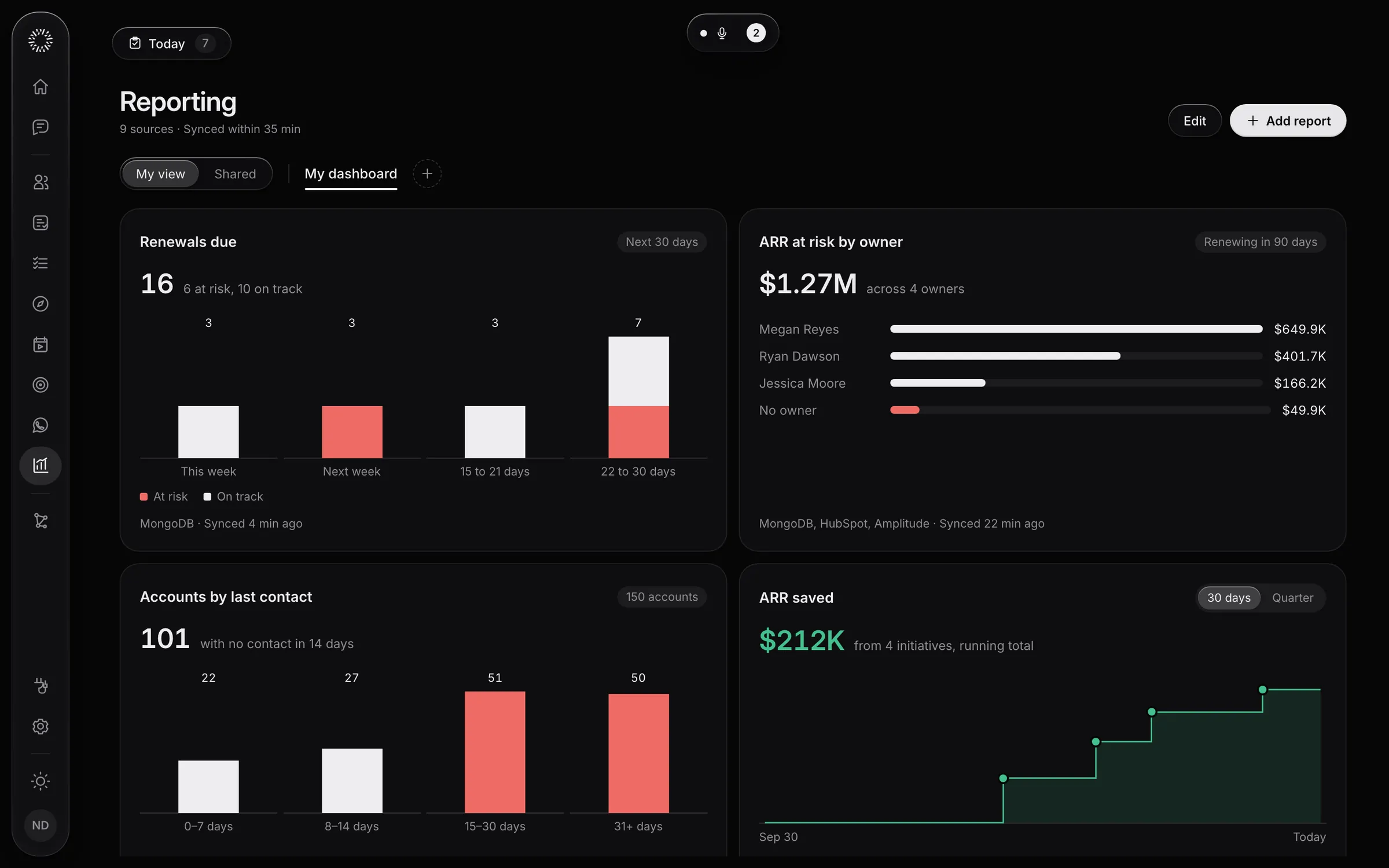
What does reporting look like?

Renewals due, ARR at risk by owner and ARR saved, each from your own sources and synced on a schedule.

Reporting: renewals due, ARR at risk by owner and ARR saved
Reporting, in a sample workspace

Can WiseOrg build dashboards and reports?

Describe the report you need. WiseOrg builds it from your sources, keeps it current, and posts it to a Slack channel after you approve.

Questions buyers ask

How do you measure the ROI of AI?

Bind each action to a business metric, record a baseline at the source, and read the metric again after the action. WiseOrg does this for every action, six hours later, and logs misses as well as wins.

Can a forecast count as a win?

No. Forecasts never count as saved. Only a measured change at the source does.

What if something else moved the number?

When it re-reads the number, WiseOrg also checks what else touched the account in that window. If the cause is unclear, the result is classified as inconclusive.

Every risk with an owner. Every directive in motion.

Book a demo to see the loop run end to end.